Agency in the Age of Peer Production (2012)
In this book, my colleagues and I argue that peer production tools and peer production pedagogy are an effective model for managing large university writing programs. We use ethnographic methodology to study our first-year writing program. We look at how mentoring, peer-production technologies, gift culture, and the “wisdom of the crowds” can help instructors build a curricular program together.

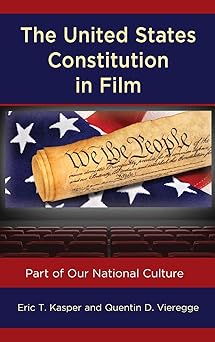
The U.S. Constitution in Film: Part of Our National Heritage (2018)
In this book, Eric Kasper and I analyze the ways that films–especially American films–depict constitutional concepts and rights. We cover films that address the numerous different constitutional amendments and that address the three branches of our government–executive, legislative, and judicial.
“Exigency: What Makes My Message Indispensable to My Reader” (2020)
In this Writing Spaces chapter, I define Exigency and then explain several different strategies rhetors can use exigency as a rhetorical tool in their writing. Writing Spaces is written with an audience of student-writers in mind.

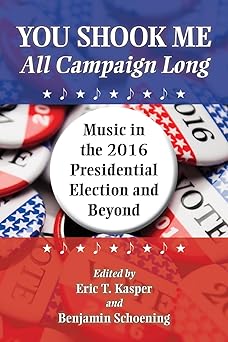
“Ameritude: Framing and Convergence Culture in the American Political Landscape” (2018)
In this book chapter, I write about a musical group that supported Donald Trump’s 2016 Presidential Campaign. I analyze the musical group’s lyrics and performances and connect it to George Lakoff’s theories of moral framing. The book, You Should Me All Campaign Long, edited by Eric T. Kasper and Benjamin Schoening, covers many different musical connections to the 2026 Presidential Campaign.
“The Five Paragraph Essay is Rhetorical Sound” (2017)
In this book entry, I wrote about the five paragraph theme and talked about his advantages and disadvantages as a teaching tool, in my essay, “The Five-Paragraph Essay is Rhetorically Sound.”

 Quentin Vieregge, PhD